
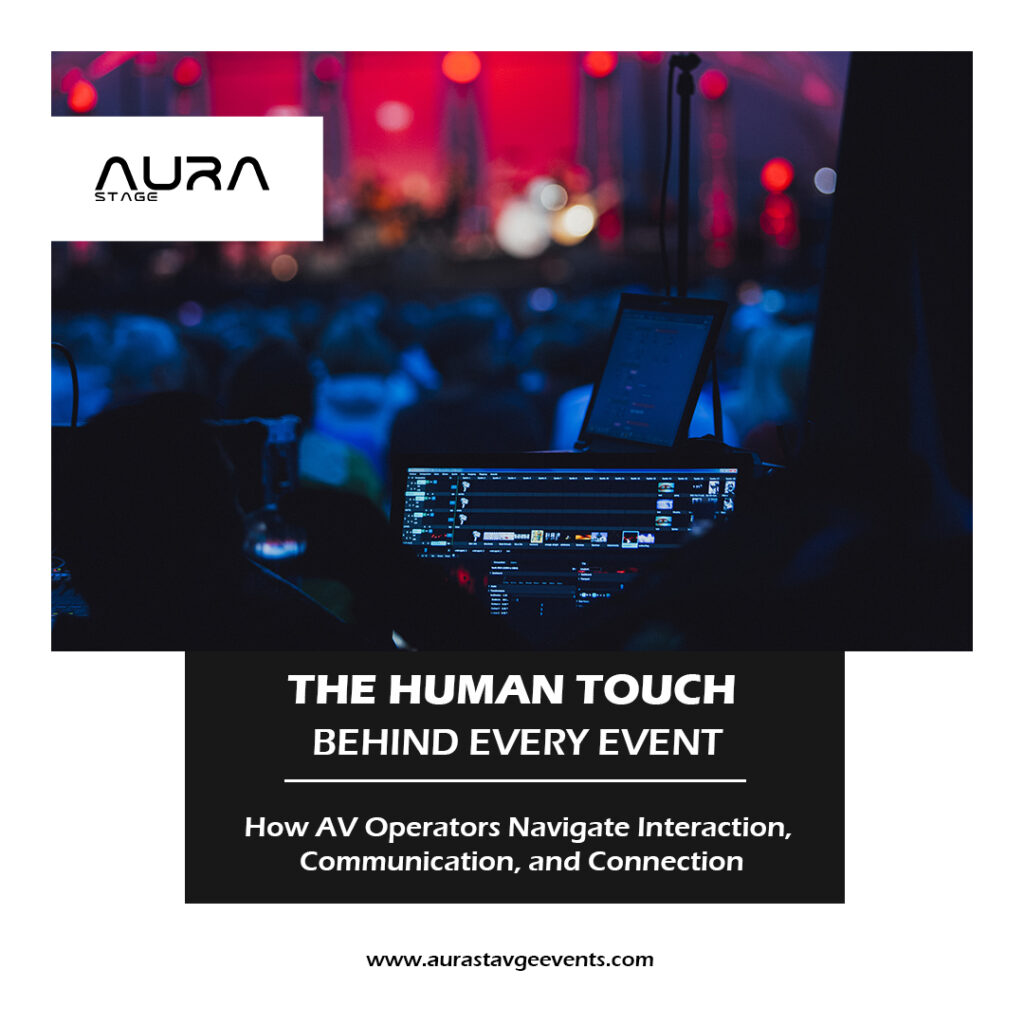
The Human Touch Behind Every Event: How AV Operators Navigate Interaction, Communication, and Connection
While technical skills are essential, it’s an AV operator’s communication, empathy, and teamwork that truly ensure an event’s success. Here’s how those human factors play out in real-world scenarios:
1. Translating Vision into Reality
Clients often arrive brimming with creative visions—sometimes unrealistic or technically unfeasible. AV operators must interpret those ideas, manage expectations, and offer practical alternatives with clarity and warmth. As one industry write-up puts it, “technicians must communicate effectively with clients to manage their expectations and offer realistic solutions.” ([IES Comm.])IES COMMUNICATIONS
2. Coordination Under Time Pressure
Events run on precise timelines. AV operators must collaborate closely with planners, stage managers, and venue staff, ensuring every cue aligns perfectly. Clear, calm, real-time communication is key to avoiding missteps when consequences are most visible.
3. Calm in Crisis Builds Trust
From projector failures to mic dropouts, live events always carry risk. Operators who maintain composure, transparently explain issues, and swiftly offer solutions turn crises into opportunities to reinforce trust with their teams and clients.
4. Bridging Teams with Shared Understanding
Effective collaboration hinges on bridging technical and non-technical worlds. When planners possess basic AV literacy, and technicians understand event priorities, decision-making becomes smoother and more aligned.
5. Frameworks for Safe, Clear Communication
In high-stakes fields—like healthcare, aviation, or emergency response—communication frameworks help mitigate risk. The SACCIA Safe Communication model, for example, emphasizes five key skills: Sufficiency, Accuracy, Clarity, Contextualization, and Interpersonal Adaptation—all crucial when pressure’s high and clarity matters most.Wikipedia
6. Learning from AV Failures
Mistakes in AV setups often spotlight communication breakdowns—misunderstood instructions, unclear setup plans, or poor documentation. These failures, while challenging, offer valuable lessons—and underscore the human side of technical operations.HAVI DESIGN
7. Industry Voices: Real Challenges, Real Talk
Discussions among AV professionals highlight human-focused challenges:
“So many problems stem from project managers and clients not understanding what they need and involving an integrator until too late.”
“Complexity of integrated solutions, staff shortages, and lack of standards”—these recurring themes point to communication and collaborative breakdowns in the industry.Reddit
Summary: Communication Strategies That Elevate AV Work
| Focus Area | Human-Centric Benefit |
| Expectation Alignment | Builds trust by setting realistic and shared goals |
| Clear, Team Sync | Prevents errors when timing is tight and stakes are high |
| Composed Troubleshooting | Reinforces confidence and smooths over mishaps |
| Cross-Role Fluency | Builds smoother teamwork among diverse stakeholders |
| Structured Communication | Ensures clarity in high-stress, fast-moving situations |
| Reflection on Failures | Drives continuous improvement through feedback |
| Peer Insight | Highlights communication gaps and the need for process refinements |
AV operators are more than technicians—they’re communication orchestrators. By listening, clarifying, and connecting, they shape the dialogue that makes seamless production possible. Interested in adding case studies or deeper insights into frameworks like SACCIA or industry-wide communication norms?